下载App
资质规则
旅行
账户
Brun066
One of the most significant episodes in the city's artistic history.
新圣母玛利亚教堂的点评
点评:There are numerous compelling reasons to take an interest in this church and its adjoining convent.
The church itself is a distinguished example of Italian Gothic architecture.
It's well known that the Gothic style — which arrived in Italy from France via Cistercian monastery churches (such as Fossanova, Casamari, and San Galgano) or urban churches like Sant’Andrea in Vercelli — was interpreted in a highly distinctive manner south of the Alps (with the notable exception of Milan Cathedral). Churches were stripped of the forest of spires and the exuberant sculptural ornamentation typical of the style north of the Alps; instead, the new style was defined primarily by the pervasive use of pointed arches across the bays. The result was the "austere" style of Italian creations, which highlighted the essential nature of the new architectural models; recalling the Cistercian churches that had served as the conduit for the style into Italy.
Santa Maria Novella is a prime example of this particular version of European Gothic, alongside other churches in Florence (such as Santa Croce and the Cathedral) and elsewhere (including San Petronio and San Francesco in Bologna, San Francesco in Assisi, Santa Maria dei Frari in Venice, San Lorenzo in Naples, and many others).
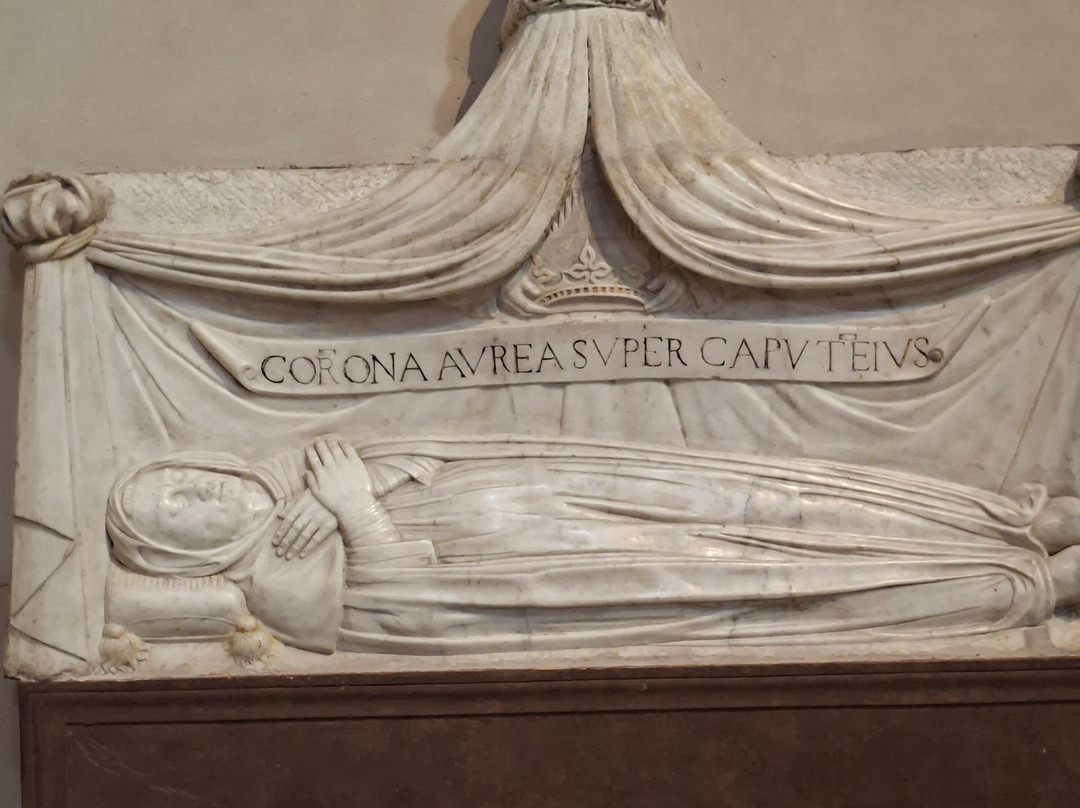
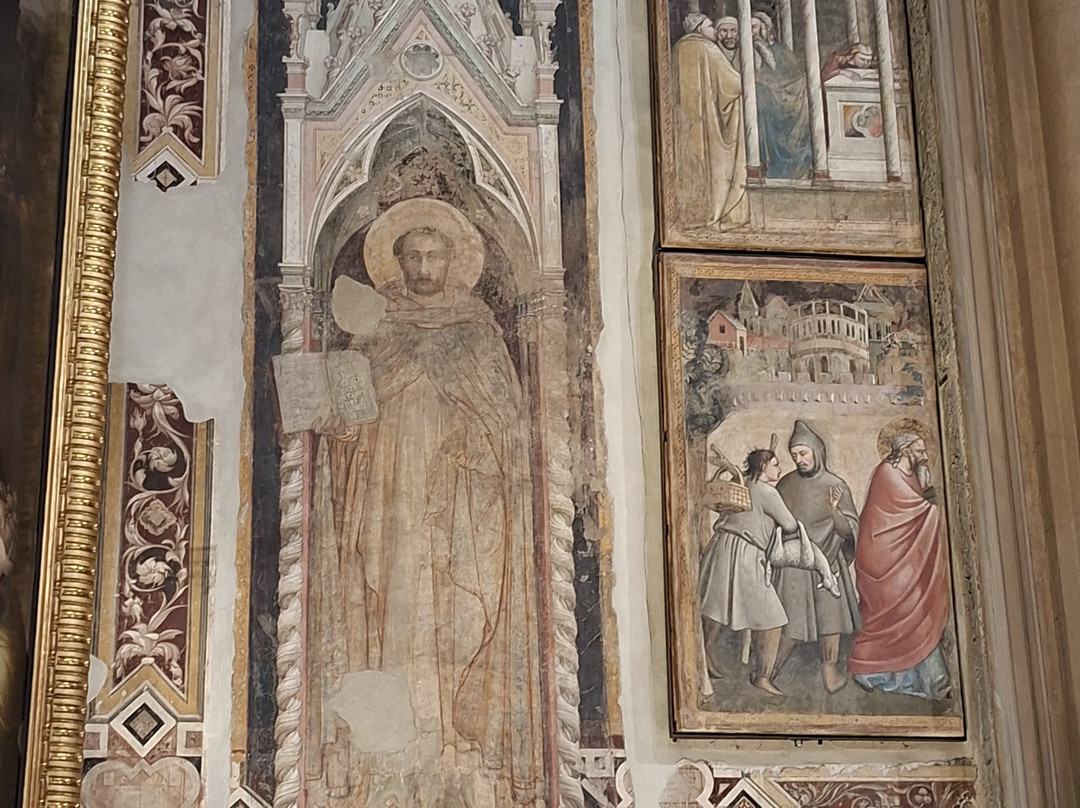
Over time, magnificent fresco cycles were incorporated into this restrained architectural framework. Outstanding examples include the frescoes by Filippino Lippi in the Filippo Strozzi Chapel, those by Ghirlandaio in the Main Chapel (or Tornabuoni Chapel), and those by Nardo di Cione in the Strozzi Chapel. Then there are other absolute masterpieces - albeit on a smaller size — such as Masaccio’s "Trinity" in the third bay on the left, Brunelleschi’s "Crucifix" in the Gondi Chapel, and Nino Pisano’s "Madonna and Child" in the Rucellai Chapel.
The fundamental role played by this church — which represents the Dominican Order in Florence — for the city’s wealthy classes is further confirmed by the fact that its magnificent façade was built thanks to the munificence of the Rucellai family. This patronage enabled the brilliant solution devised by Leon Battista Alberti to bridge the Gothic and Renaissance styles. Consequently, among the façades of Florence’s great churches, this is the only one that was neither left unfinished (like San Lorenzo) nor forced to resort to Neo-Gothic additions in the 19th century (like the Duomo or Santa Croce).
All this would be more than enough to attest to the architectural excellence of the site; yet the list of masterpieces grows when one considers the adjacent convent: such as the so-called "Cappellone degli Spagnoli" (the convent’s former chapter house), frescoed by Andrea di Buonaiuto and his school, or the "Chiostro Verde" (Green Cloister) featuring Paolo Uccello’s scenes from Genesis.
There is ample evidence to assert that this complex represents one of the greatest achievements in the city’s artistic history.
翻译:有诸多令人信服的理由让我们对这座教堂及其附属的修道院产生兴趣。
这座教堂本身就是意大利哥特式建筑的杰出典范。
众所周知,哥特式风格是从法国经西多会修道院教堂(如福萨诺瓦教堂、卡萨马里教堂和圣加尔加诺教堂)或像韦尔切利的圣安德烈亚教堂这样的城市教堂传入意大利的;在阿尔卑斯山以南地区,这种风格被以一种极具特色的方式加以诠释(米兰大教堂是个显著的例外)。这些教堂去除了阿尔卑斯山以北风格所特有的密集尖塔以及繁复的雕塑装饰;取而代之的是,这种新风格的主要特征便是各拱间广泛使用尖拱。由此便形成了意大利建筑中那种“简朴”的风格,它凸显了这种新建筑模式的本质特征,让人联想到那些作为此风格传入意大利的媒介的西多会教堂。圣玛丽亚诺维拉教堂是这种欧洲哥特式风格的典型范例,佛罗伦萨的其他教堂(如圣十字大教堂和主教座堂)以及其他地区的教堂(包括博洛尼亚的圣佩特罗尼奥教堂与圣弗朗西斯科教堂、阿西西的圣弗朗西斯科教堂、威尼斯的圣玛丽亚德伊弗拉里教堂、那不勒斯的圣洛伦佐教堂等等)也均体现了这一风格。
随着时间的推移,精美的湿壁画系列被融入到这一简约克制的建筑框架之中。杰出的例子包括菲利皮诺·利皮在菲利波·斯特罗齐小礼拜堂绘制的湿壁画、吉兰达约在主礼拜堂(或称托尔纳博尼小礼拜堂)创作的壁画,以及纳尔多·迪·乔内在斯特罗齐小礼拜堂所作的壁画。此外还有许多绝对堪称杰作的作品——虽然尺寸较小——比如左侧第三个拱间室内的马萨乔所绘的《圣三一》、贡迪小礼拜堂里的布鲁内莱斯基所作的《十字架上的基督》,以及鲁切拉伊小礼拜堂中尼诺·皮萨诺创作的《圣母子》。这座教堂代表着多明我会在佛罗伦萨的机构,它对当地富裕阶层所发挥的重要作用还可从这样一个事实中得到印证:其宏伟的立面正是得益于鲁切拉伊家族的慷慨资助才得以建成。正因如此,莱昂·巴蒂斯塔·阿尔伯蒂才得以设计出巧妙的方案,成功将哥特式风格与文艺复兴风格融为一体。因此,在佛罗伦萨众多大教堂的立面中……这是唯一一座既没有半途而废(如圣洛伦佐教堂),也无需在19世纪强行添加新哥特式元素的建筑(如圣母百花大教堂或圣十字大教堂)。
仅此一点便足以证明该建筑的卓越之处;不过,若再把毗邻的修道院也纳入考量,其杰作清单还会进一步延长:比如所谓的“西班牙人礼拜堂”(即修道院原来的会议室),其内壁壁画便由安德烈亚·迪·布奥纳尤托及其画派创作。或是拥有保罗·乌切洛所绘制的《创世纪》场景的“绿回廊”。
有大量证据可以证明,这座建筑群堪称这座城市艺术史上的最伟大的成就之一。

© 2026 Tripadvisor 版权所有。
部分照片由 VFM Leonardo 提供。
TripAdvisor公司对外部网站的内容一概不负责。优惠价格中不含税和其他费用。
ICP证:沪B2-20200433
沪ICP备20013175号
 沪公网安备31010502005427号
鹰程信息技术(上海)有限公司