下载App
资质规则
旅行
账户
wanderingfeet1987
A magnificent sculpture!
狮子纪念碑的点评
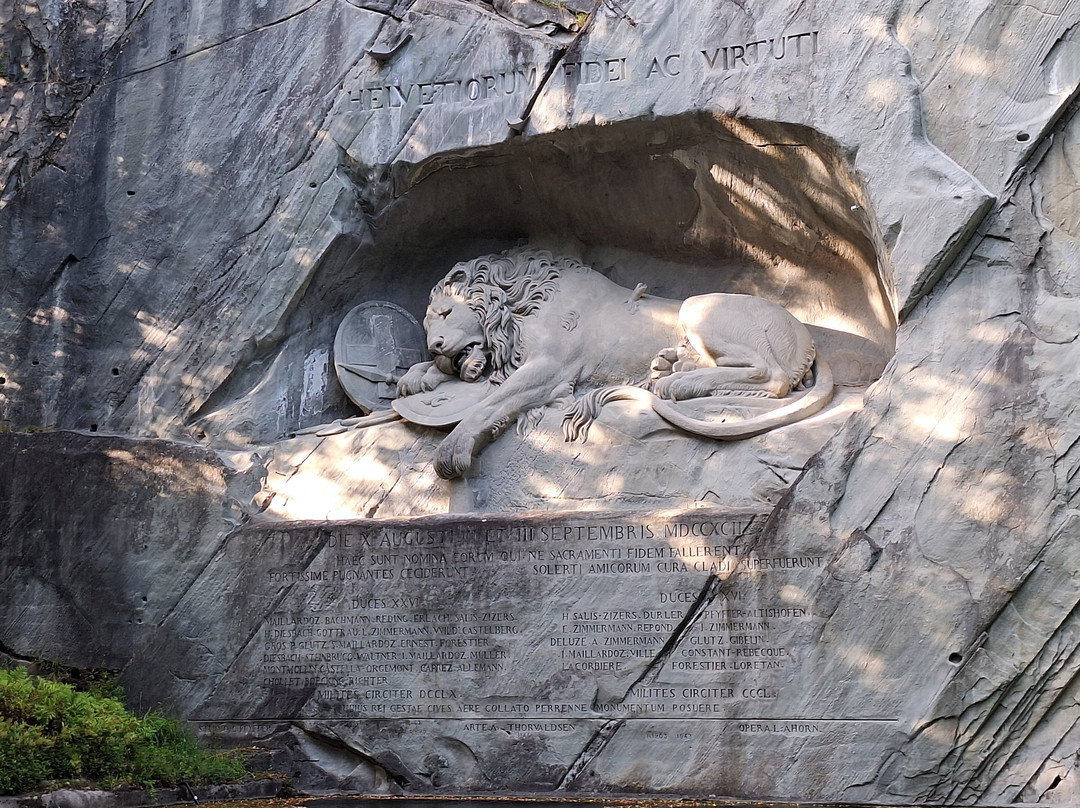
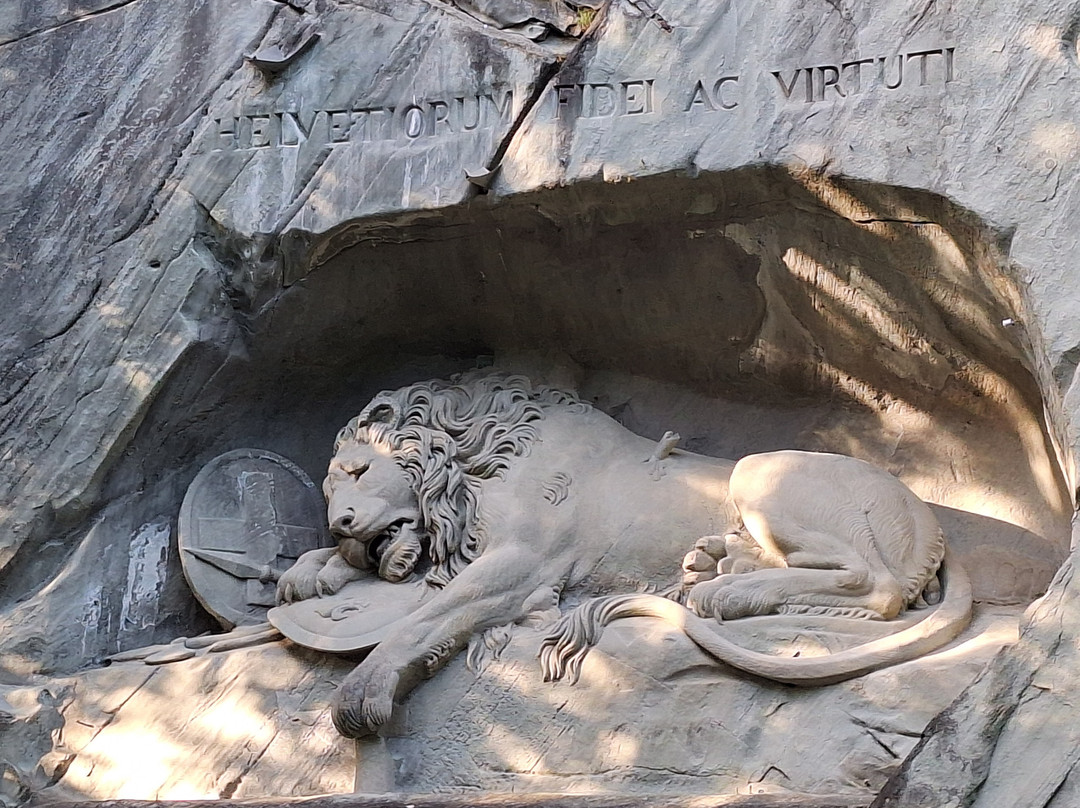
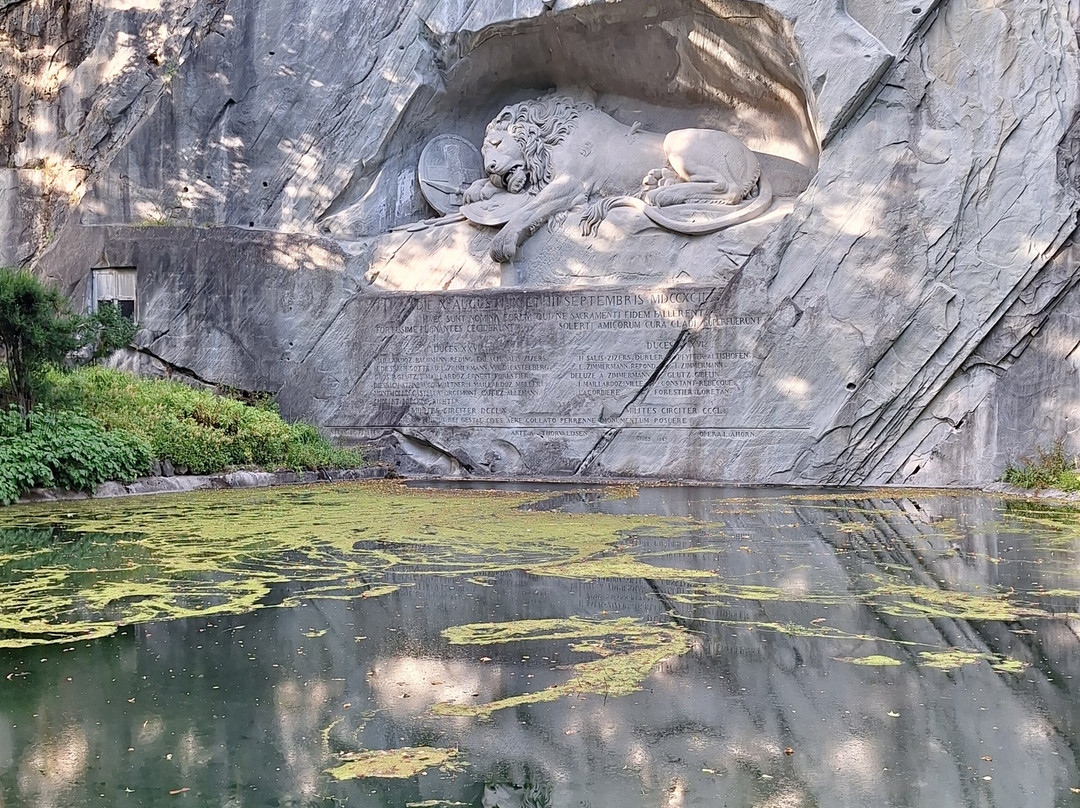
点评:One of the most famous monuments in Switzerland, the Lion Monument, also known as the Lion of Lucerne, was designed by the neo-classical sculptor Bertel Thorvaldsen. Carved in a small grotto behind a pond, it lists the names of officers and soldiers of the Swiss Guard who died while defending the Tuileries palace from the French revolutionaries in 1792. I could try to do justice to this monumental sculpture by describing the mortally wounded lion but I would rather use the word of the great American writer Mark Twain from his travelogue A Tramp Abroad:
"The Lion lies in his lair in the perpendicular face of a low cliff — for he is carved from the living rock of the cliff. His size is colossal, his attitude is noble. His head is bowed, the broken spear is sticking in his shoulder, his protecting paw rests upon the lilies of France. Vines hang down the cliff and wave in the wind, and a clear stream trickles from above and empties into a pond at the base, and in the smooth surface of the pond the lion is mirrored, among the water-lilies."
If the above description doesn't persuade you to see this impressive sculpture, which is only 20 minutes away from Lucerne train station, then you could also check out the nearby Glacier garden, though you should take note that a single ticket to it costs around £22.
"The Lion lies in his lair in the perpendicular face of a low cliff — for he is carved from the living rock of the cliff. His size is colossal, his attitude is noble. His head is bowed, the broken spear is sticking in his shoulder, his protecting paw rests upon the lilies of France. Vines hang down the cliff and wave in the wind, and a clear stream trickles from above and empties into a pond at the base, and in the smooth surface of the pond the lion is mirrored, among the water-lilies."
If the above description doesn't persuade you to see this impressive sculpture, which is only 20 minutes away from Lucerne train station, then you could also check out the nearby Glacier garden, though you should take note that a single ticket to it costs around £22.
翻译:瑞士最著名的纪念碑之一——狮子纪念碑,又称卢塞恩狮子,是由新古典主义雕塑家贝尔特·托瓦尔森设计的。这座雕刻在池塘后方小洞穴中的纪念碑,镌刻着1792年为保卫杜伊勒里宫免遭法国革命者袭击而牺牲的瑞士卫队官兵的名字。我本可以尝试用文字描述这尊身负重伤的狮子来展现这座不朽雕塑的震撼,但我更愿意引用美国伟大作家马克·吐温在其游记《漫游欧洲》中的一段话:
“狮子卧于低矮悬崖的垂直峭壁上——因为它是由悬崖的天然岩石雕刻而成。它体型庞大,姿态高贵。它低垂着头,断矛插在肩上,保护性的爪子搭在法国睡莲上。藤蔓从悬崖垂下,随风摇曳,清澈的溪流从上方潺潺流下,汇入山脚下的池塘,狮子的倒影映照在平静的池塘水面上,与睡莲交相辉映。”
如果以上描述还不足以说服您去参观这座令人印象深刻的雕塑(距离卢塞恩火车站仅 20 分钟路程),那么您也可以去附近的冰川花园看看,不过需要注意的是,单张门票的价格约为 22 英镑。
“狮子卧于低矮悬崖的垂直峭壁上——因为它是由悬崖的天然岩石雕刻而成。它体型庞大,姿态高贵。它低垂着头,断矛插在肩上,保护性的爪子搭在法国睡莲上。藤蔓从悬崖垂下,随风摇曳,清澈的溪流从上方潺潺流下,汇入山脚下的池塘,狮子的倒影映照在平静的池塘水面上,与睡莲交相辉映。”
如果以上描述还不足以说服您去参观这座令人印象深刻的雕塑(距离卢塞恩火车站仅 20 分钟路程),那么您也可以去附近的冰川花园看看,不过需要注意的是,单张门票的价格约为 22 英镑。

© 2026 Tripadvisor 版权所有。
部分照片由 VFM Leonardo 提供。
TripAdvisor公司对外部网站的内容一概不负责。优惠价格中不含税和其他费用。
ICP证:沪B2-20200433
沪ICP备20013175号
 沪公网安备31010502005427号
鹰程信息技术(上海)有限公司