下载App
资质规则
旅行
账户

Brun066
A magnificent monument, that also serves as a major center of the Buddhist faith.
鲁万威乐西亚舍利塔的点评
点评:Ruwanwelisaya, along with Jetavana and Abhayagiri, is one of the three great dagobas in Anuradhapura.
Its construction was undertaken by King Dutugemunu (reigned 161–137 BC), making it the oldest of the three great dagobas mentioned above.
It was originally built to a height of 55 meters, which would have made it the shortest of the three dagobas. However, while the other two were reduced in height over time — reaching their current height of around 70 meters — Ruwanwelisaya underwent the opposite process thanks to the interventions of subsequent rulers, and today its peak soars to 103 meters.
It stands out from the other two (which are currently clad in exposed brick) because it is completely plastered in white. It is dazzling by day under the equatorial sun (and, as I can see, illuminated by blinding artificial light at night).
In reality, all the dagobas were originally plastered in white. This coating helped protect the structures from the driving monsoon rains.
But while Ruwanwelisaya has been a site of continuous worship to this day (meaning the white coating has been maintained and renewed), the other two dagobas were completely abandoned and forgotten over the last few centuries. Moreover, like most of Anuradhapura’s ancient structures, they were swallowed by the jungle — much like the famous Angkor Wat in Cambodia. Once these two dagobas were reclaimed from the wilderness, conservation authorities decided to leave the brickwork exposed rather than reconstructing the plaster.
Like the other two dagobas, Ruwanwelisaya was the focal point of a great monastery, known as Anuradhapura Maha Viharaya — the most influential center of Theravada Buddhism — whose fortunes rose and fell alongside those of the capital city of Anuradhapura. Yet, the Ruwanwelisaya dagoba has remained a site of continuous worship right up to the present day.
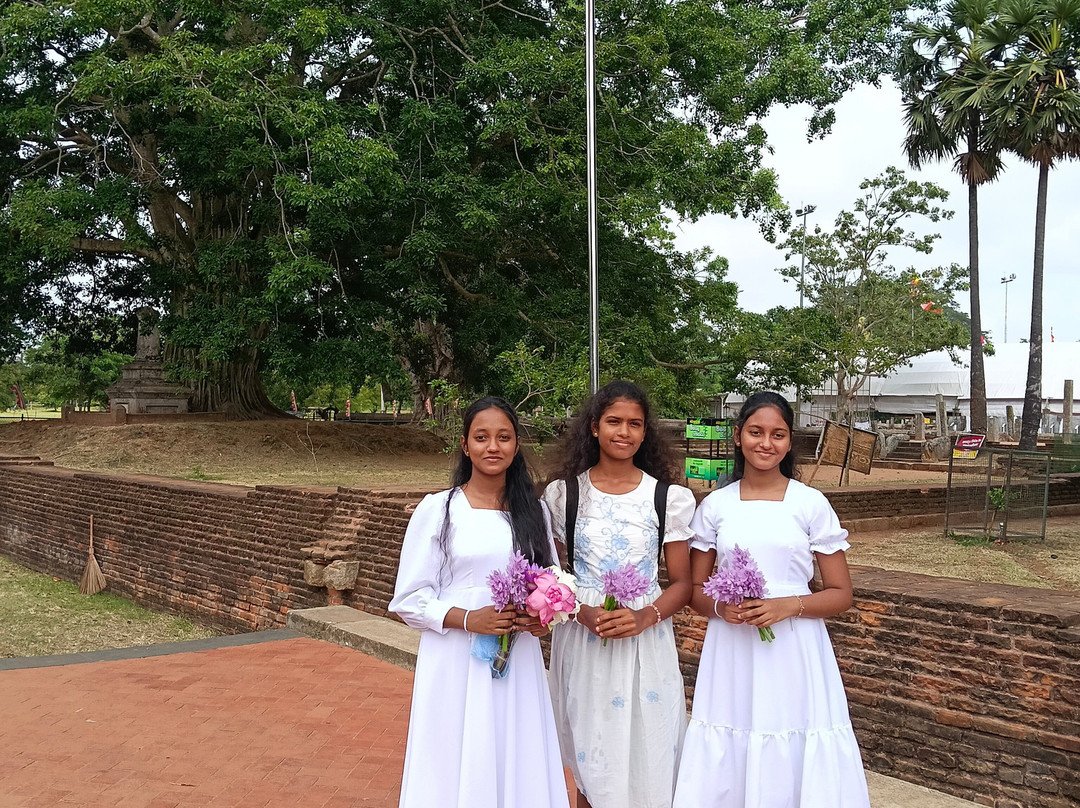
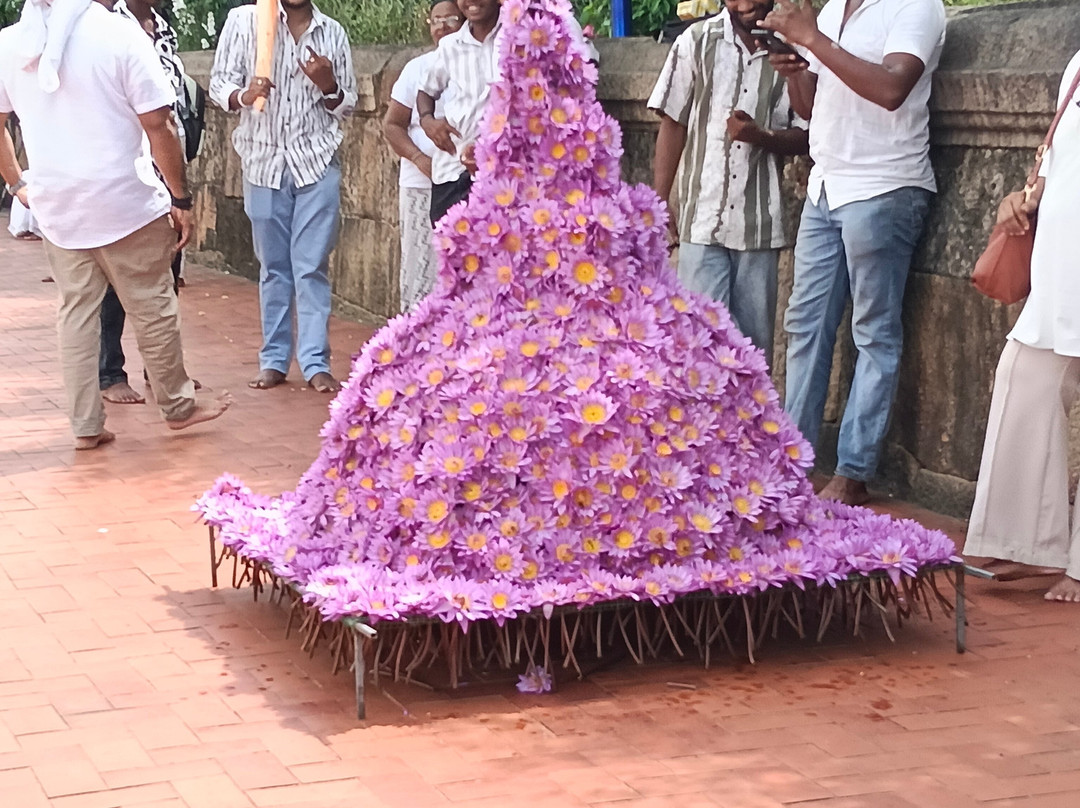
We believe that every visitor — just as we did — will have noticed the striking contrast in this regard between the other two dagobas and Ruwanwelisaya: while the first two are sites of both archaeological and religious interest, at Ruwanwelisaya religious fervor prevails. The dagoba is surrounded by worshippers praying beneath specially erected canopies and is the destination of continuous processions, which sometimes even carry replicas of the dagoba fashioned from fresh flowers.
The reason for this devotion becomes clear when one realizes that the dagoba enshrines a large collection of the Buddha's sacred corporeal relics. In Buddhism, such relics represent far more than mere mementos; they embody the actual divine presence.
翻译:鲁万韦利萨雅与杰塔瓦纳、阿巴亚吉里一起,是阿努拉德普勒三大佛塔之一。
它是由杜图格穆努国王(公元前161年至137年在位)下令建造的,因此也是上述三大佛塔中历史最悠久的一座。
最初建造时,它的高度为55米,按此高度它本应是三座佛塔中最矮的一座。然而,虽然另外两座塔楼的高度随时间推移而降低——最终达到了如今约70米的高度——但得益于历代统治者的修缮与加固,鲁万韦利萨雅塔楼却呈现出相反的变化趋势,如今其塔尖高度已达103米。
它与另外两座塔楼截然不同(后者目前表面裸露着砖块),因为它全身都涂有白色灰浆。在赤道地区的阳光下,它显得耀眼夺目(而且如我所见,夜晚时它又被强烈的人造灯光照亮)。
实际上,所有的佛塔最初都涂有白色灰浆。这种涂层有助于保护建筑结构免受季风雨的侵蚀。
不过,虽然鲁万韦利萨亚佛塔至今仍是人们不断礼拜的场所(因此其白色涂层也得以得以维持和更新),但在过去的几个世纪里,另外两座佛塔则完全被废弃并被人遗忘。此外,与阿努拉德普勒的多数古代建筑一样,它们也被丛林所吞噬——这种情况与柬埔寨著名的吴哥窟颇为相似。这两座佛塔从荒野中复原后,文物保护部门决定让砖墙保持原状,而不再重新涂抹灰泥。
与另外两座佛塔类似,鲁万韦利萨耶佛塔也曾是一座大型僧院的中心,该僧院被称为“阿努拉德普勒大寺”——它是上座部佛教最具影响力的中心,其兴衰与首都阿努拉德普勒的命运紧密相连。然而,鲁万韦利萨亚佛塔至今仍是一个持续有人朝拜的圣地。
我们相信,每一位参观者——就像我们一样——都注意到了其他两座佛塔与鲁万韦利萨亚之间在这方面的显著差异:前两者虽兼具考古与宗教价值,但在鲁万韦利萨亚,宗教热情则占据主导地位。这座佛塔周围挤满了信徒,他们在专门搭设的遮阳棚下虔诚祈祷。络绎不绝的朝拜队伍也以佛塔为目标,有时队伍中甚至还会携带用新鲜花朵制成的佛塔复制品。
这种虔诚之情的缘由在于:佛塔内供奉着大量佛陀的肉身遗物。在佛教中,这些遗物的意义远非普通纪念品可比;它们象征着佛祖的神性临在。

© 2026 Tripadvisor 版权所有。
部分照片由 VFM Leonardo 提供。
TripAdvisor公司对外部网站的内容一概不负责。优惠价格中不含税和其他费用。
ICP证:沪B2-20200433
沪ICP备20013175号
 沪公网安备31010502005427号
鹰程信息技术(上海)有限公司