下载App
资质规则
旅行
账户
ITRT
“The Great Clock”
Gros-Horloge的点评
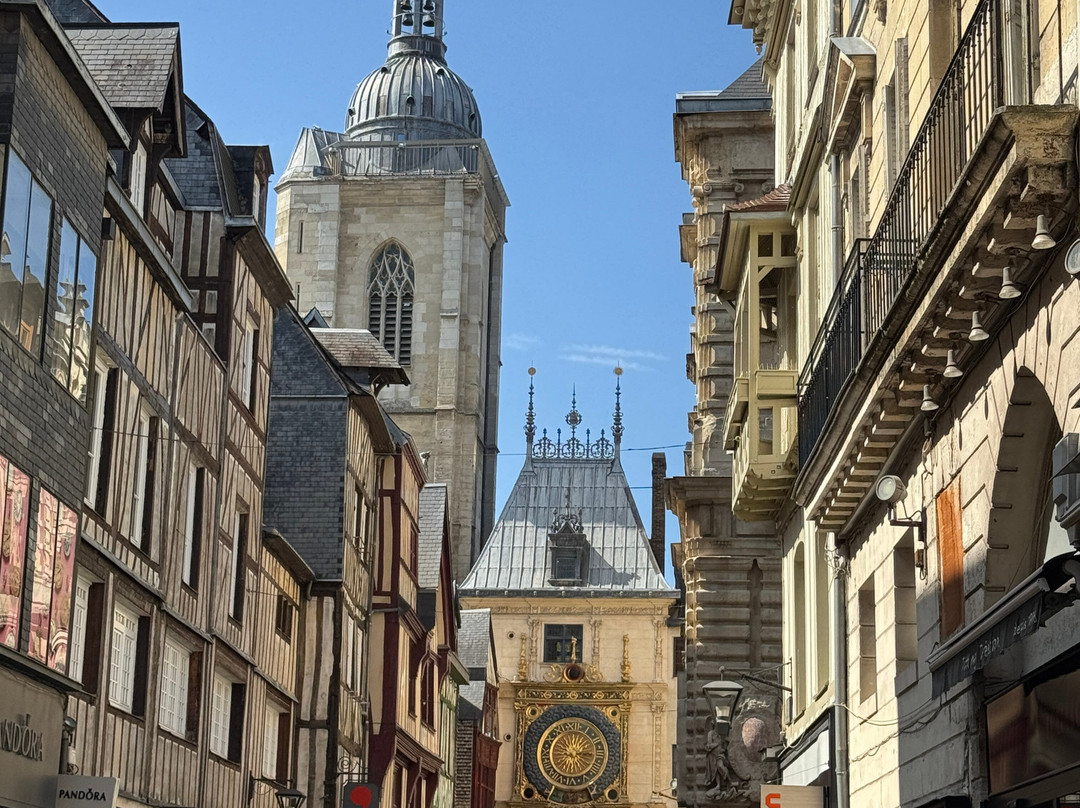
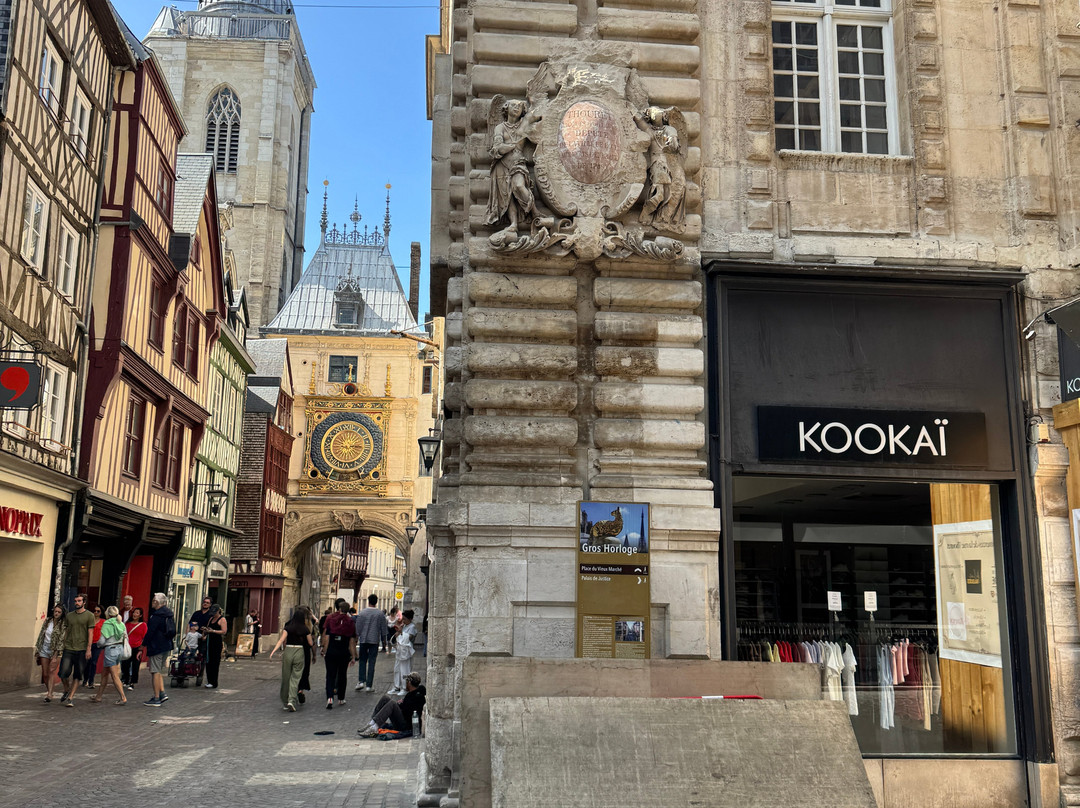
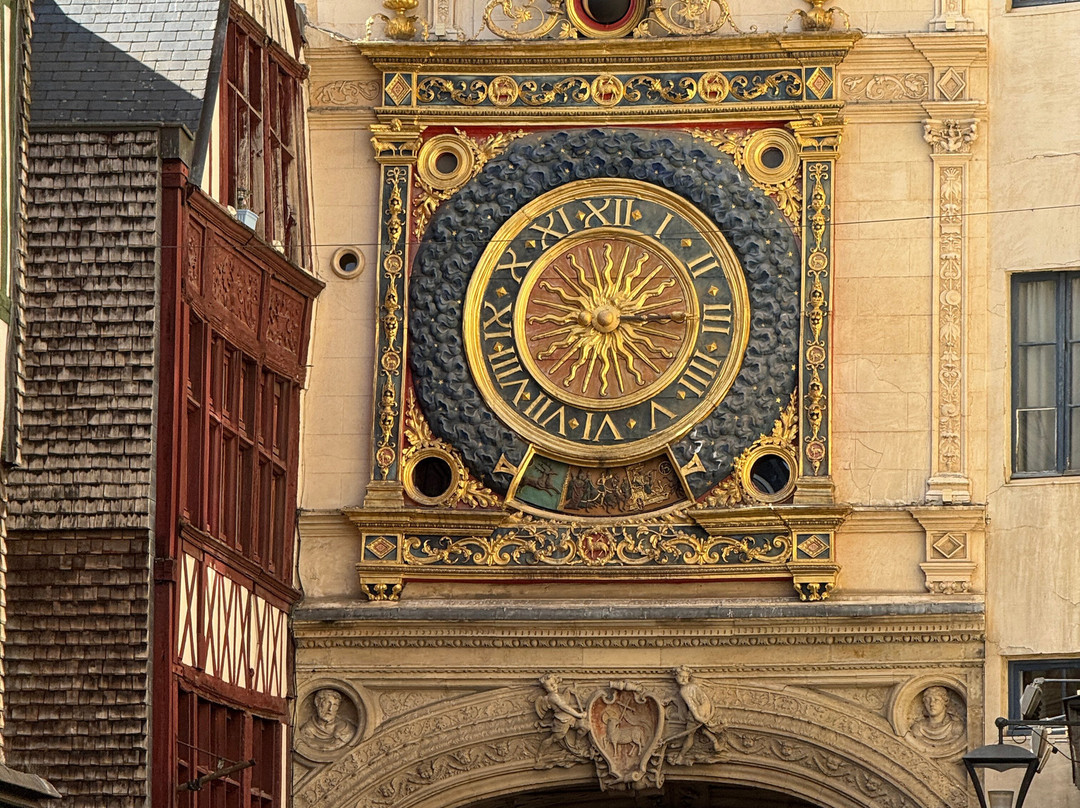
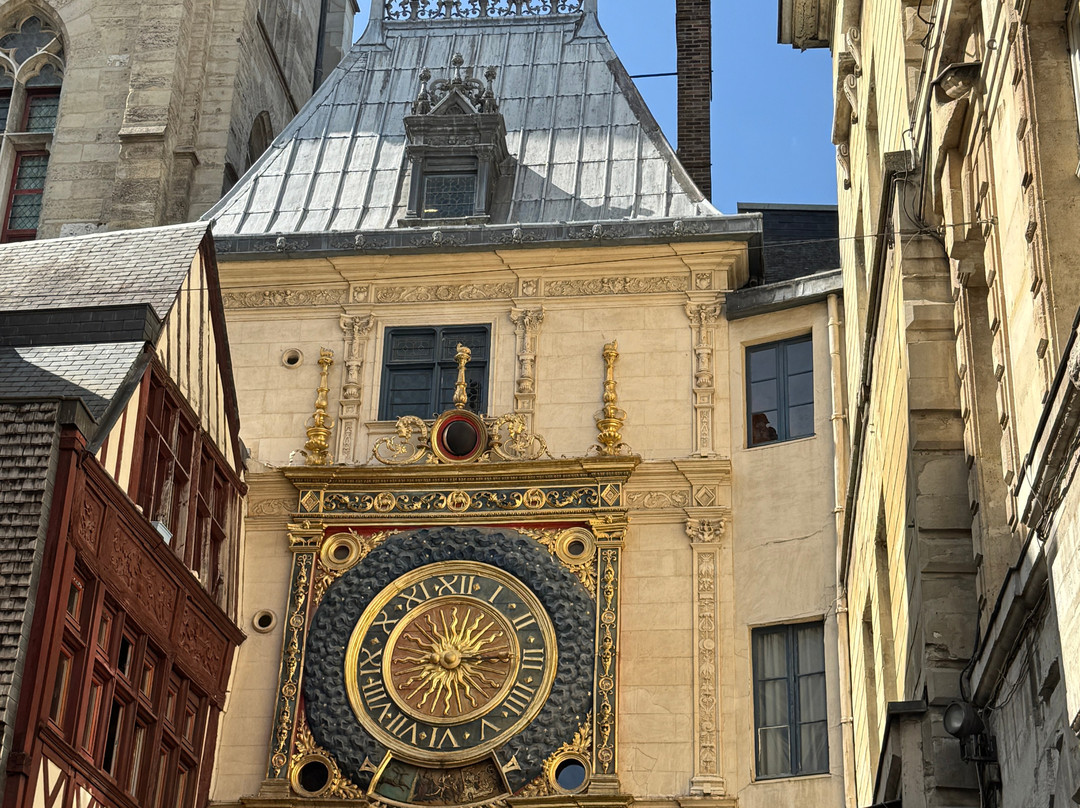
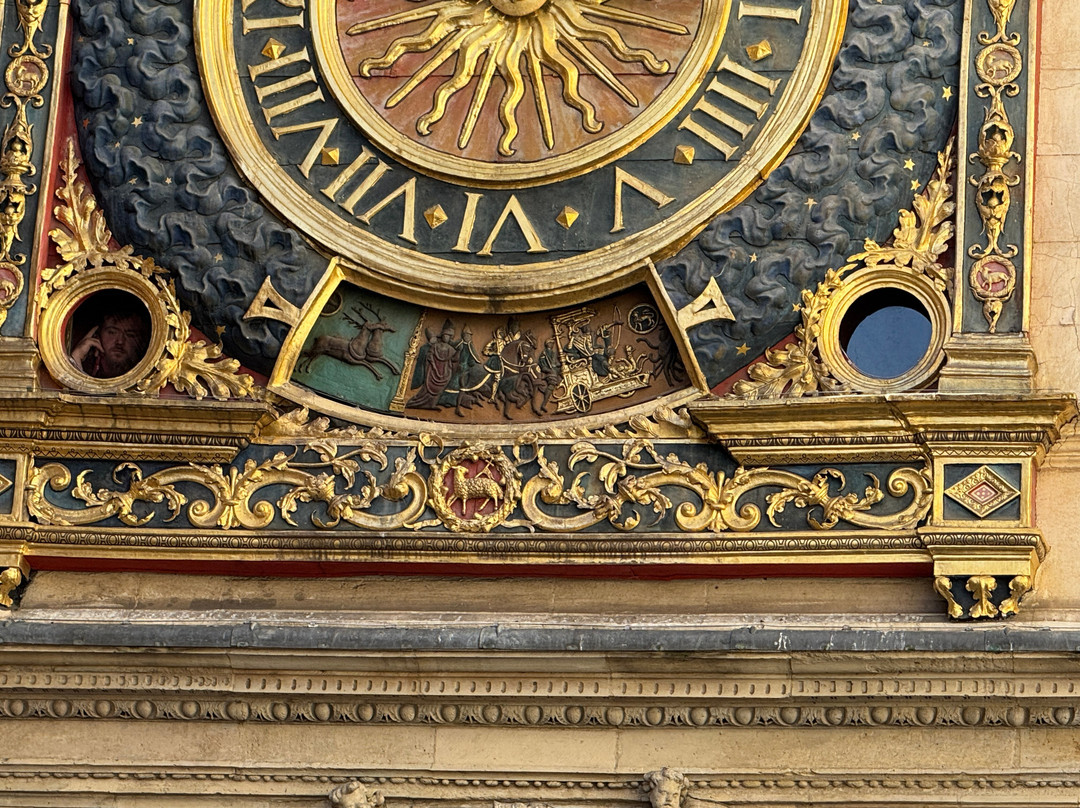
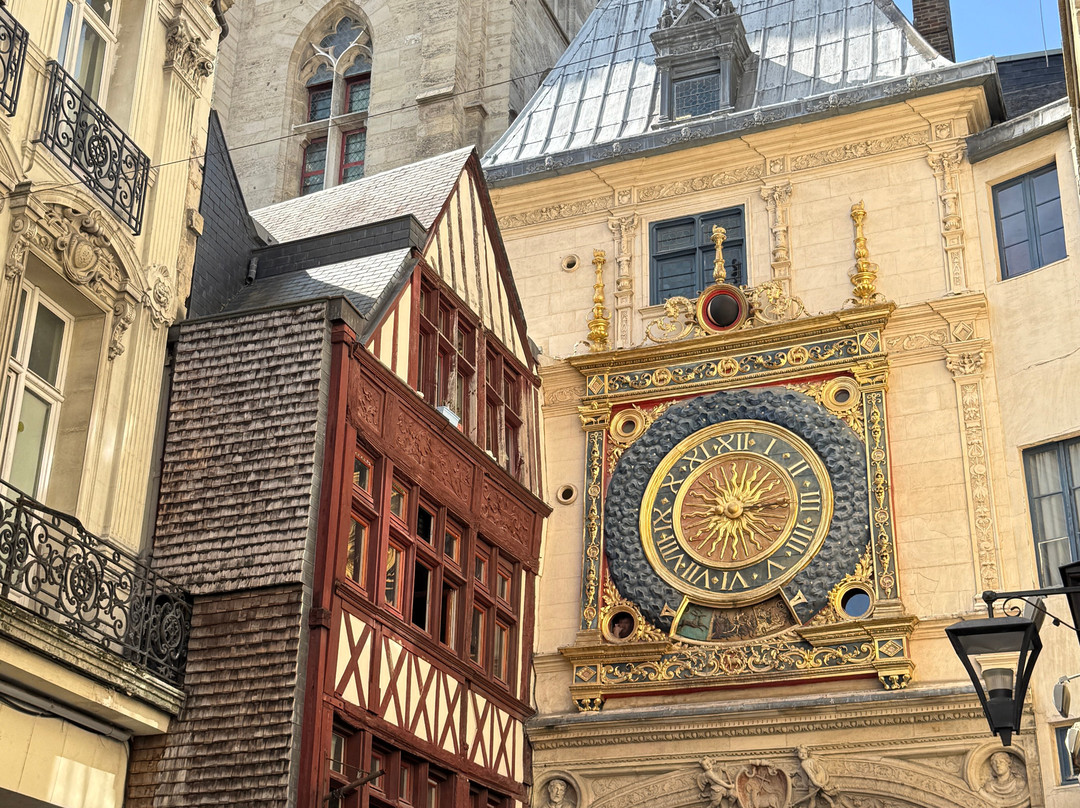
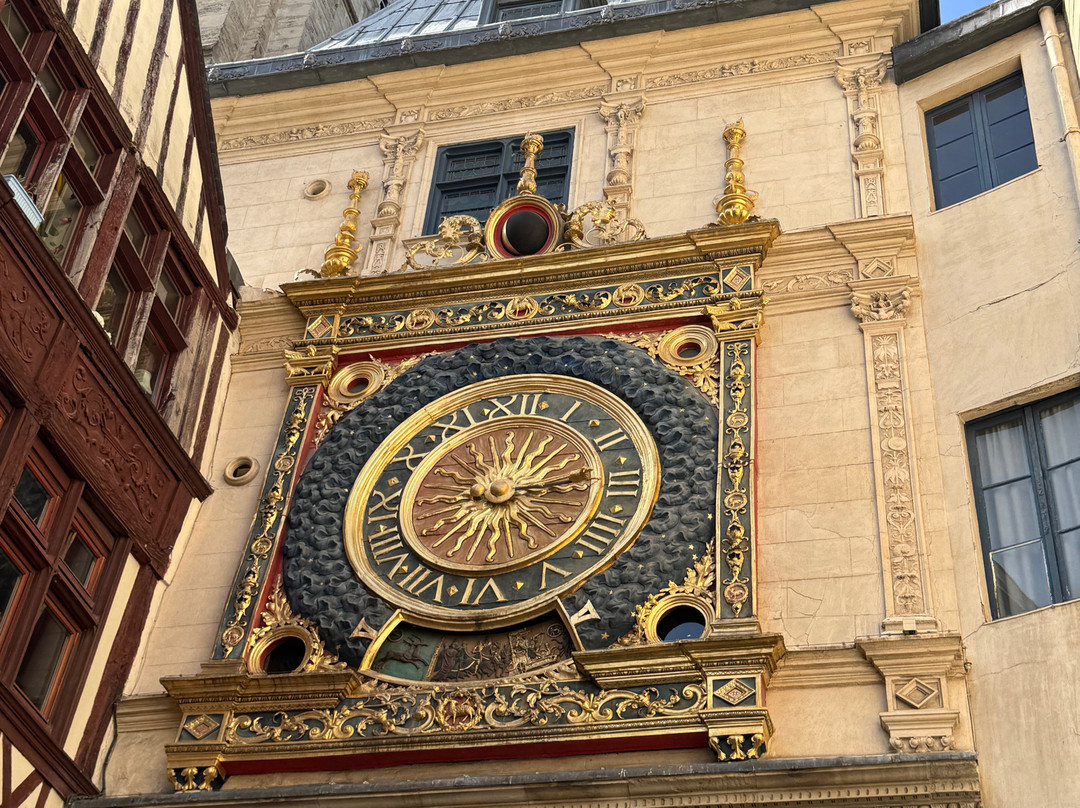
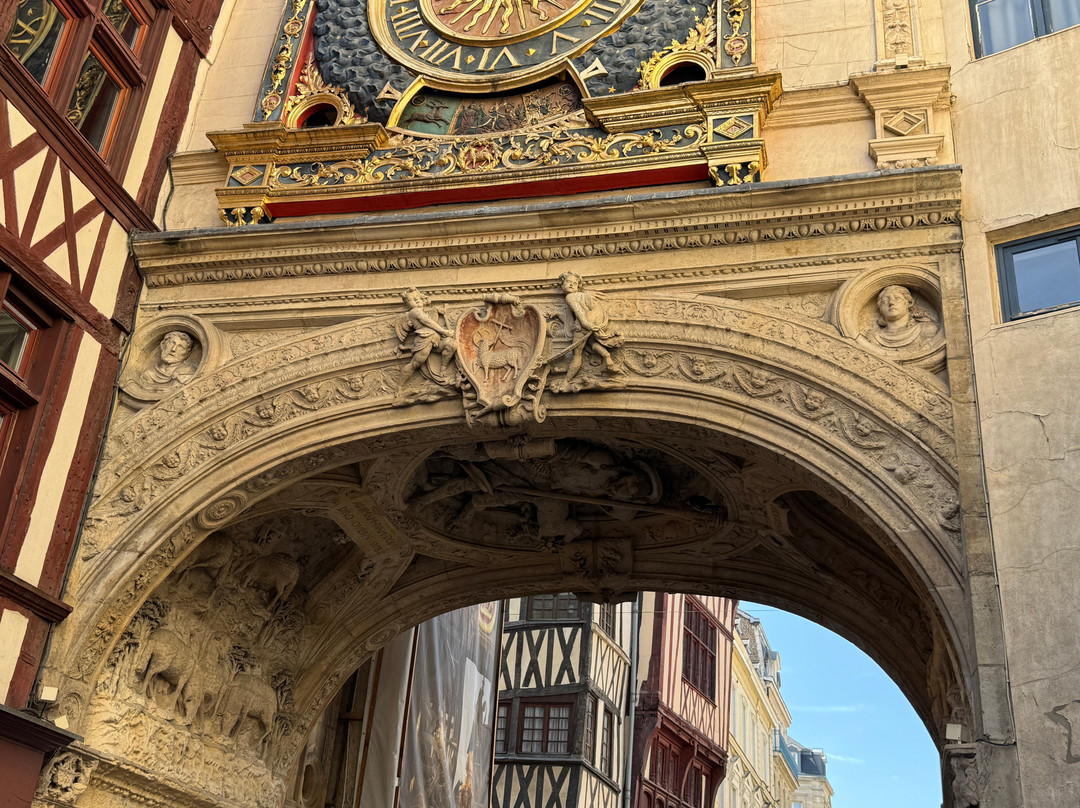
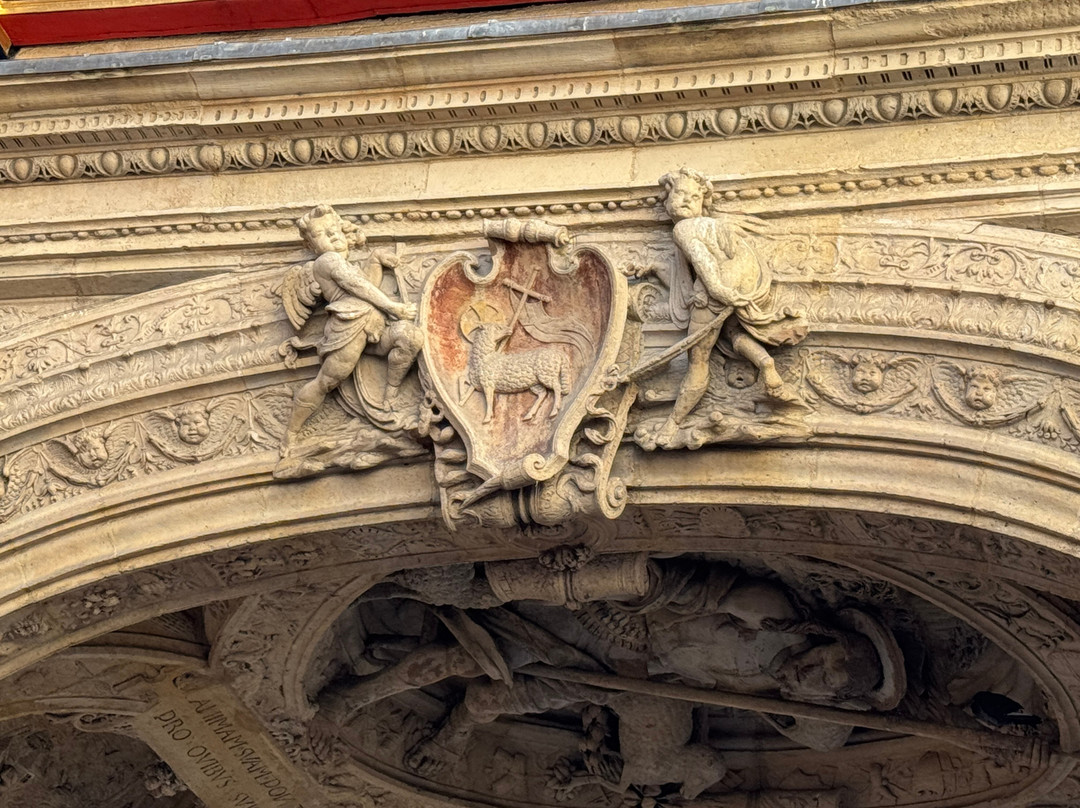
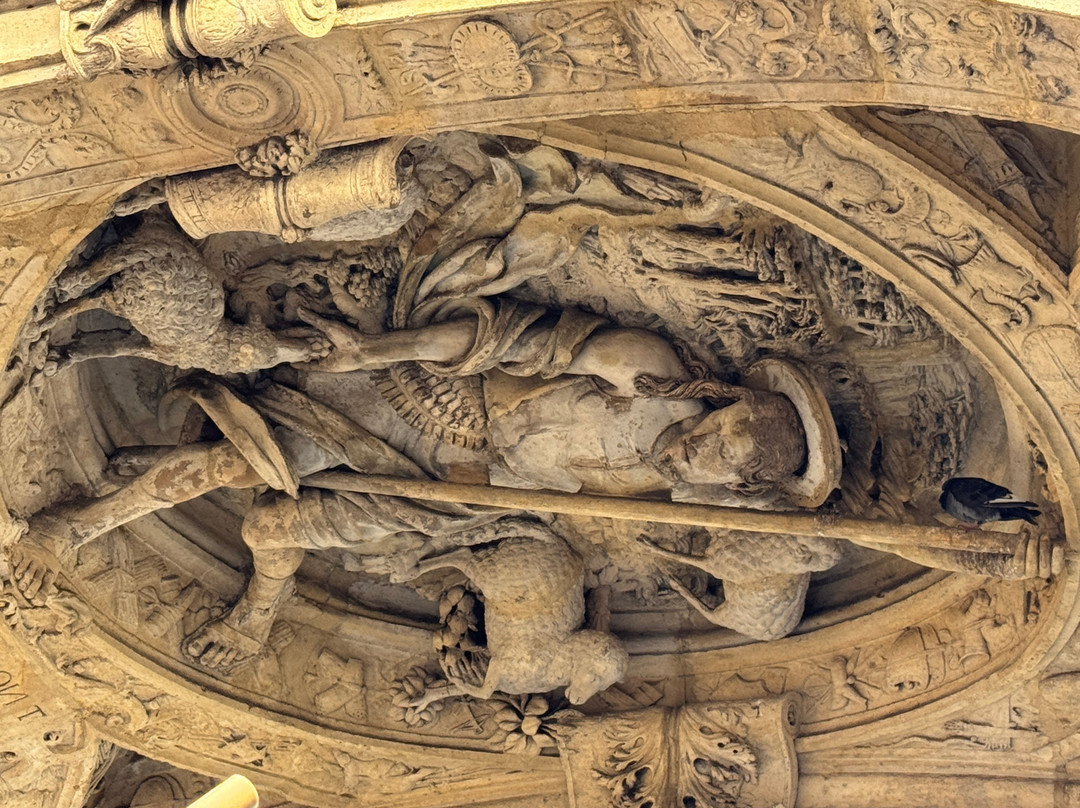
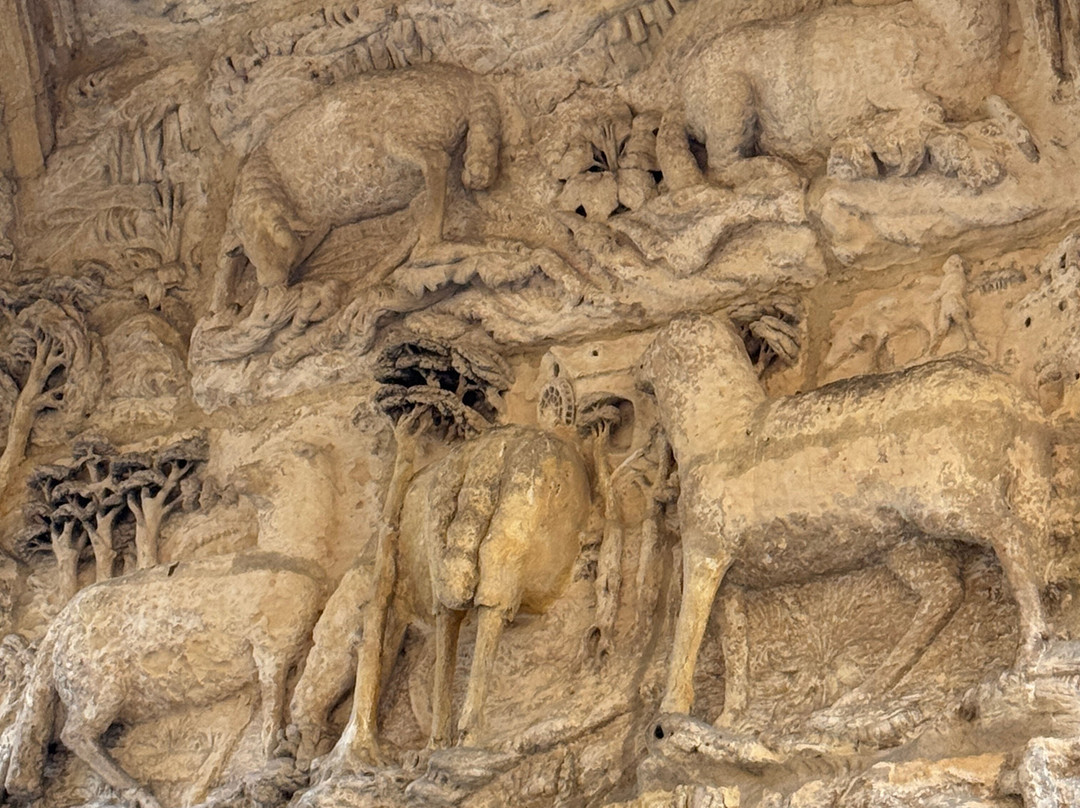
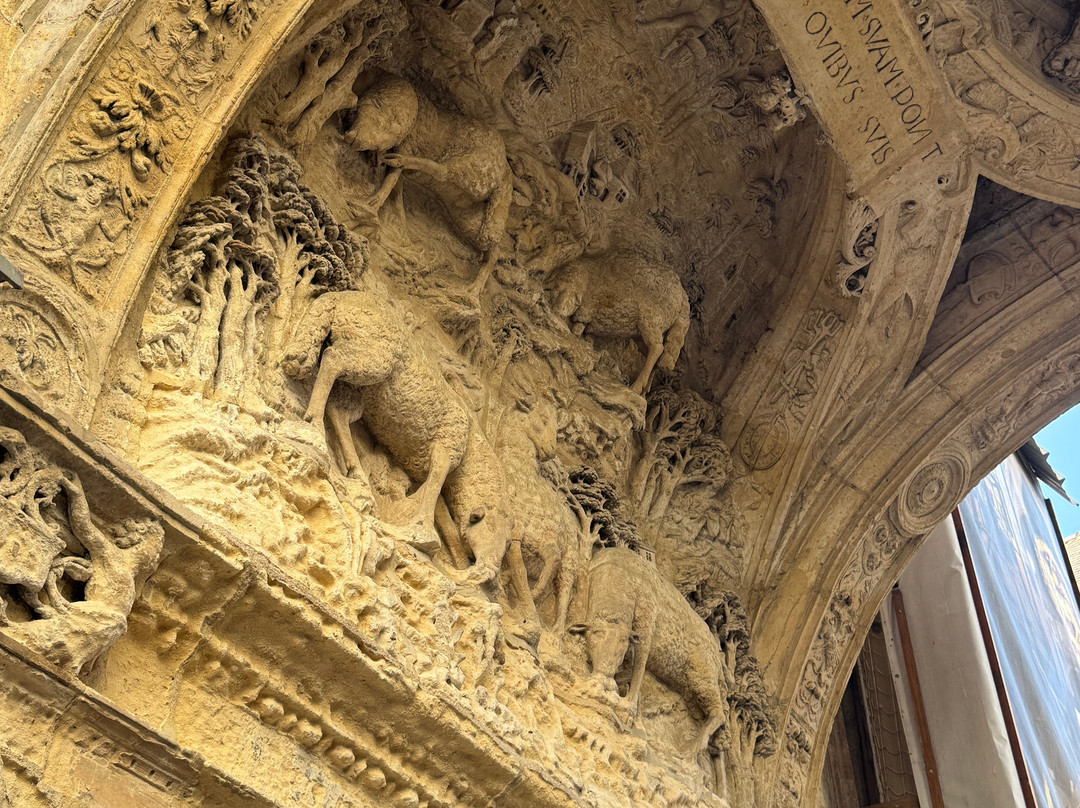
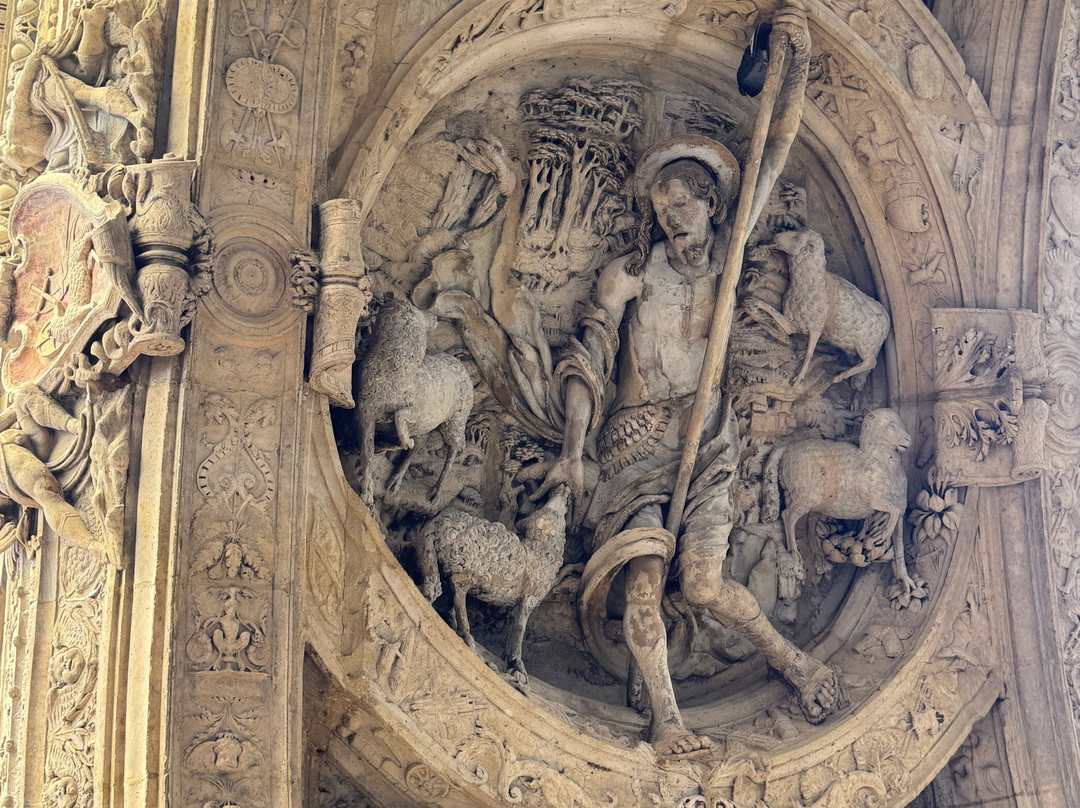
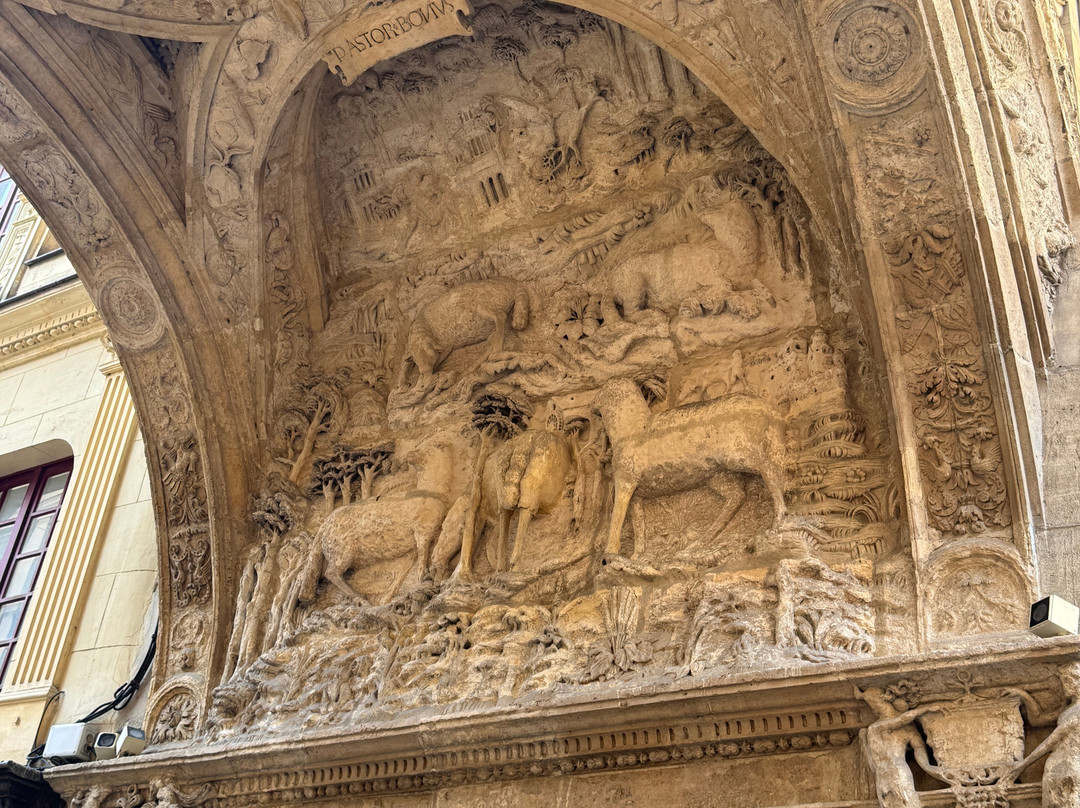
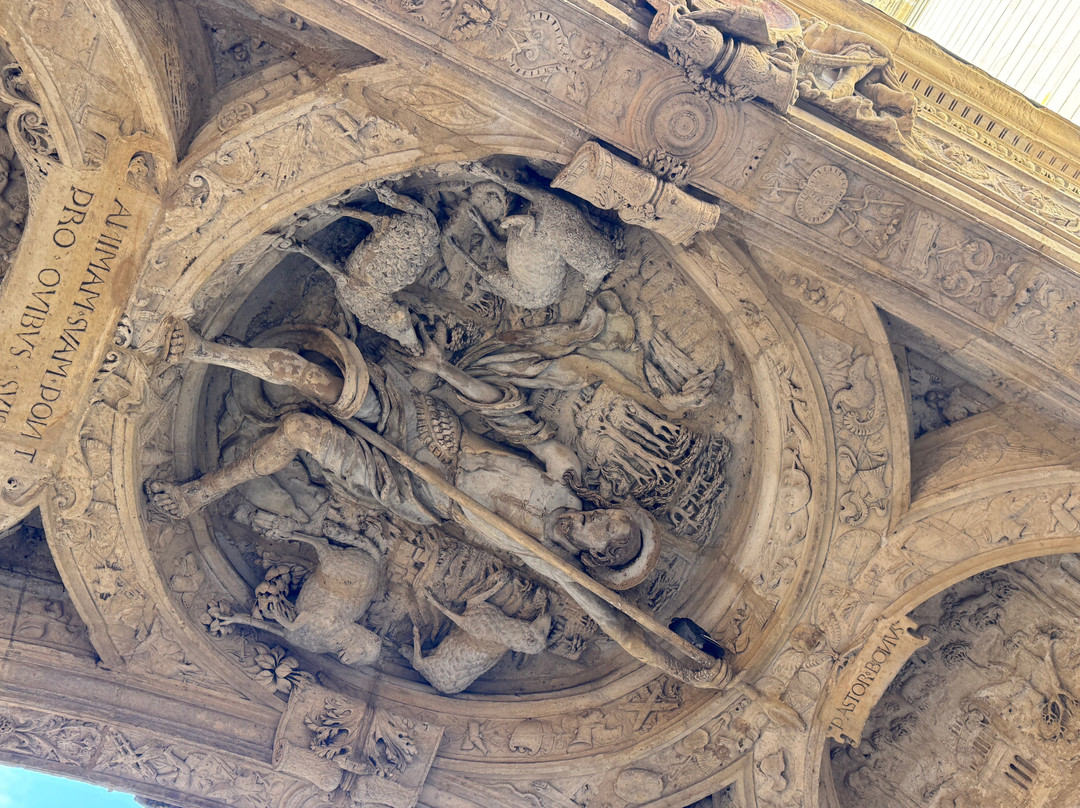
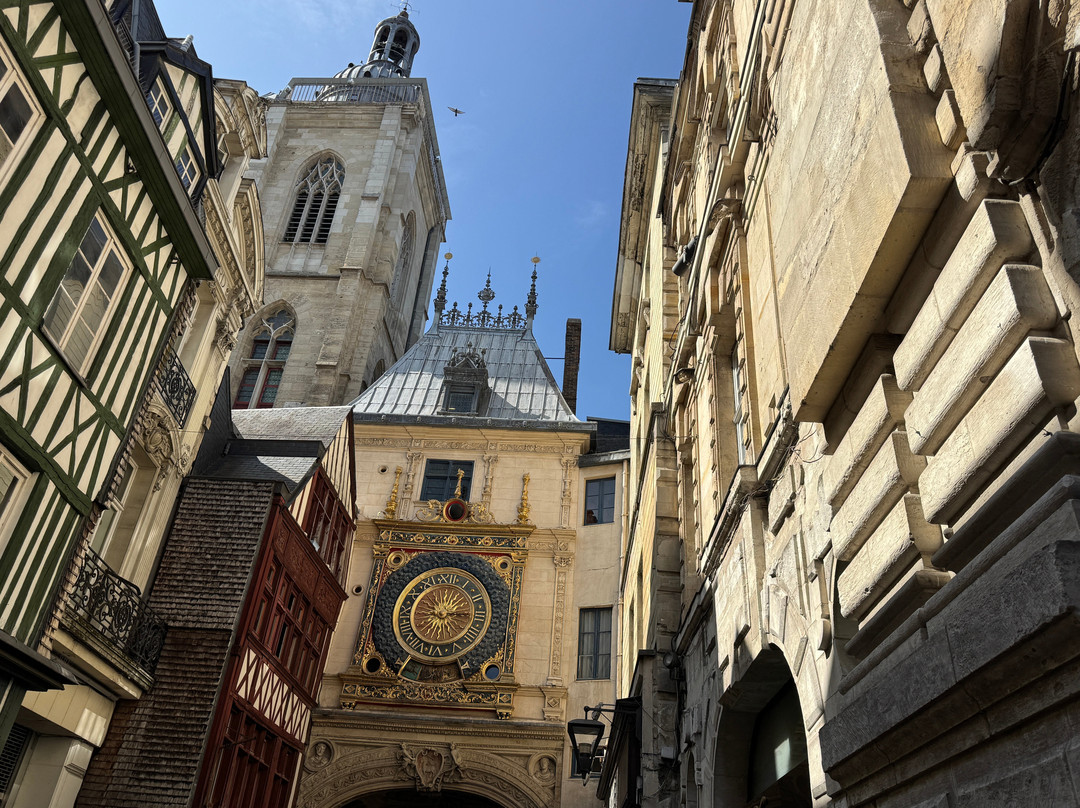
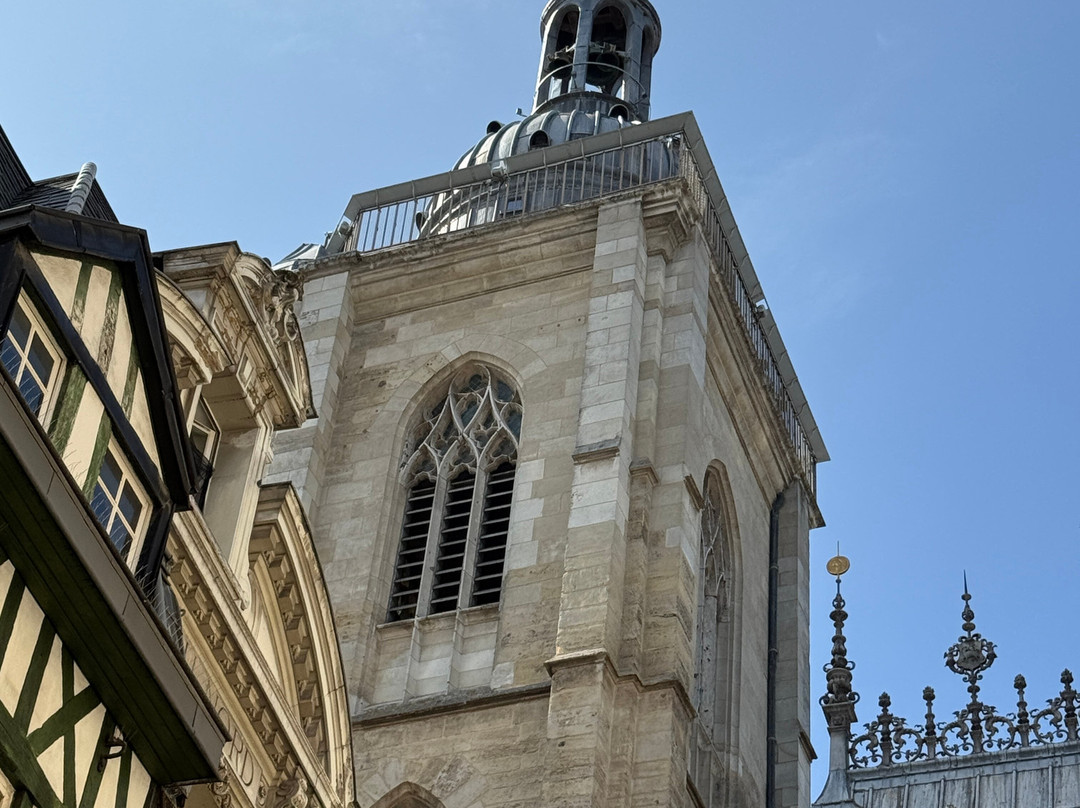
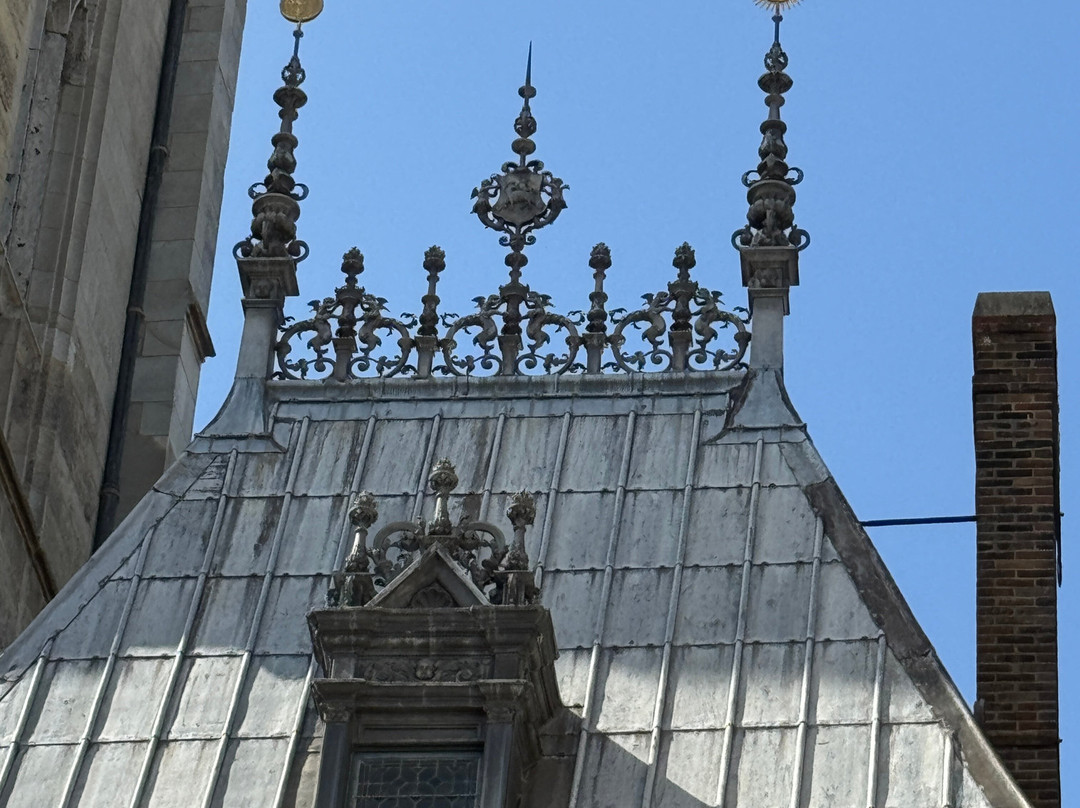
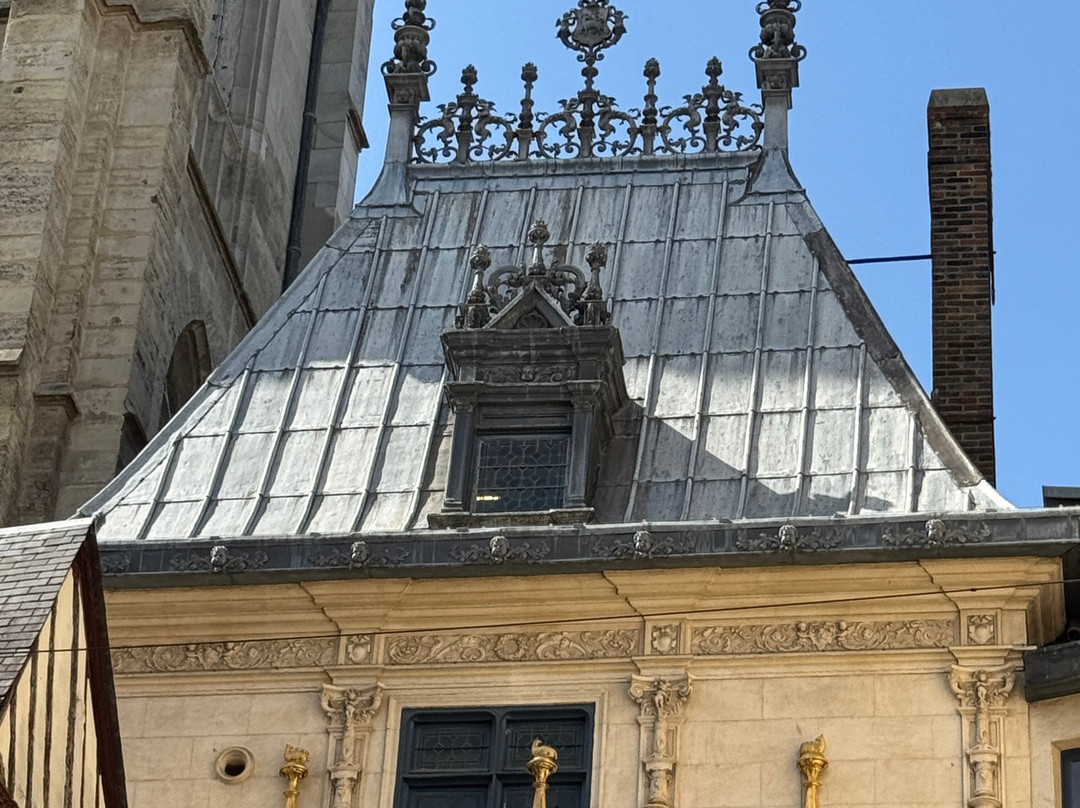
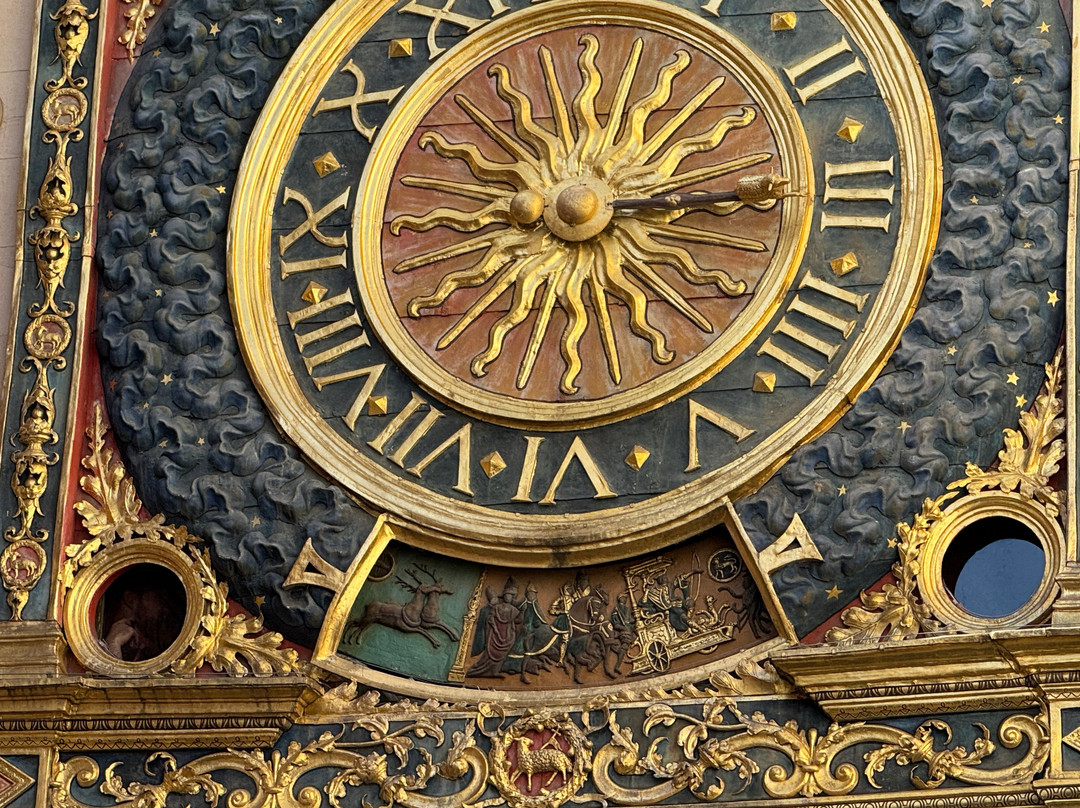
点评:After leaving the Rouen Cathedral, we waked a short distance to see Rouen’s most famous clock, Le Gros Horloge. The clock sits on a Renaissance arch and dates to the 16th century but its movement dates to the 14th century. The clock was originally house in the nearby belfry but later moved to the arch. The clock is halfway between the Rouen Cathedral and Rouen’s main shopping street. Its two faces are connected by a single mechanism and are about 8 feet in diameter. Each face has a single hand whose tip has a depiction of a lamb, Rouen’s coat of arms. Look closely at the angels on the coat arms and notice the angel with his head upside down. Our guide said a disgruntled worker did this purposely to revenge nonpayment of his work. The clock does it all. It tracks the moon phases, its one hand the hour, and the day of the week. The center of the dial has a deep blue, starry background and a golden sun radiating 24 sun rays representing the 24 hours of the day. Above the clock face a globe shows the phases of the moon. Under the VI on the clock is a god associated with the day of the week such as Saturn for Saturday and Mars for Tuesday. As you walk under the arch, take note of the sculptures and notice Rouen’s Paschal Lamb coat of arms. One of the sculptures is of Jesus as the Good Shepherd the other two have lambs which are meant to represent Rouen’s wool trade. Be sure to take the time to visit the clock if your travels bring you to Rouen, France.
翻译:离开鲁昂大教堂后,我们步行了一小段距离,去参观鲁昂最著名的钟楼——大钟楼。这座钟楼坐落在一座文艺复兴风格的拱门上,其历史可追溯至16世纪,不过内部的机械装置则是14世纪的产物。最初,这座钟被安置在附近的钟楼里,后来才被移到了现在的拱门上。大钟楼位于鲁昂大教堂与鲁昂主要商业街的中间位置。它的两个钟面由同一套机械装置驱动,每个钟面的直径约为8英尺。每个表盘上都有一根指针,其末端刻有鲁昂市徽——一只小羊的图案。仔细看看徽章上的天使们,注意那个头朝下的天使。我们的导游说,这是一个心怀不满的工人故意这么做的,目的是为了报复雇主拖欠他的工钱。这座钟功能齐全:它能显示月相、时针以及星期几。表盘中央是深蓝色背景。星空背景下有一轮金色的太阳,它发出24道光芒,象征着一天中的24小时。时钟表盘上方有一个地球仪,显示出月相变化。在时钟上的数字“VI”下方,则刻有与该星期几相对应的神祇——比如星期六对应土星,星期二对应火星。当您走过拱门时,请留意周围的雕塑,并注意鲁昂市的“复活节羔羊”纹章。其中一座雕塑描绘的是作为“好牧人”的耶稣,另外两座雕塑上则有小羊的造型,象征着鲁昂的羊毛贸易。如果您造访法国鲁昂,一定要花时间去参观这座钟楼。

© 2026 Tripadvisor 版权所有。
部分照片由 VFM Leonardo 提供。
TripAdvisor公司对外部网站的内容一概不负责。优惠价格中不含税和其他费用。
ICP证:沪B2-20200433
沪ICP备20013175号
 沪公网安备31010502005427号
鹰程信息技术(上海)有限公司